
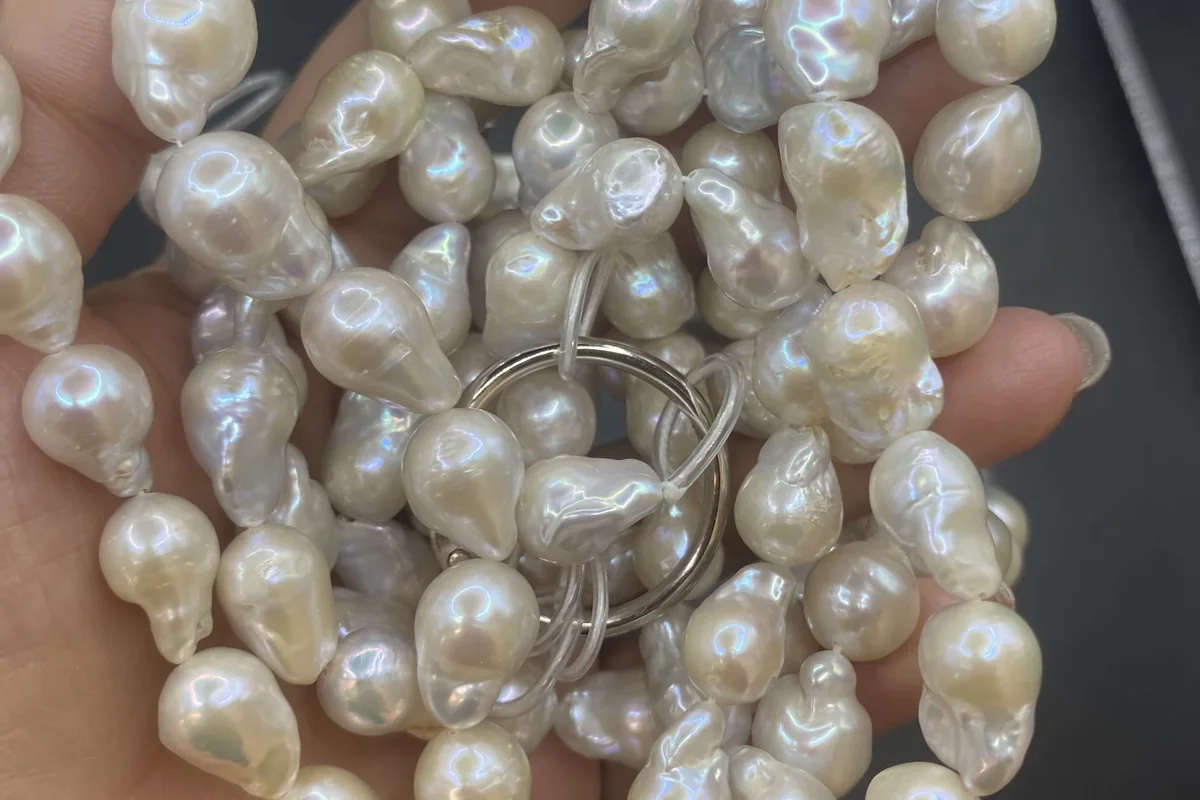
Baroque pearls are pearls with irregular shapes. The word describes form, rather than a separate pearl type or a quality grade. A listing that says only “baroque” still leaves questions about the pearl's identity and origin unanswered. GIA's pearl guide distinguishes shape from the main pearl types.
For jewelry, the useful question is what that shape will do. A broad outline may work as a pendant but dominate a small earring. Two different silhouettes can make a convincing pair if they share a similar scale and visual balance. This guide explains how to make those choices deliberately.
What “Baroque” Tells You About a Pearl
Think of a pearl description as several answers, each doing a different job. “Baroque” helps you picture the silhouette. “Freshwater cultured pearl” supplies different information. Neither expression, by itself, tells you whether a particular pearl suits your design.
Use the following comparison when reviewing photographs or sorting samples. These are design questions, not a grading scale.
| Design question | A round outline lets you emphasize | An irregular outline asks you to consider |
|---|---|---|
| What repeats across the piece? | A repeated circular profile | A shared outline family, or an intentional sequence of different forms |
| Which side faces forward? | The preferred surface and attachment position | The preferred face, side profile, widest point, and direction of the tip |
| What makes a pair look balanced? | Similar visible diameter and overall appearance | Similar visual weight, length, color, and relationship between the silhouettes |
| What should the product photo communicate? | Scale and surface appearance | Scale, three-dimensional shape, and the degree of variation a buyer should expect |
Choose the effect you want before deciding whether a particular irregularity is welcome.
Why Shape Changes the Finished Design
A loose pearl lying flat does not show how a finished earring will hang. Start by identifying the face you want the wearer to see. Turn the pearl and note where its outline becomes wider, flatter, or more pointed. Then position it as the proposed jewelry would hold it.
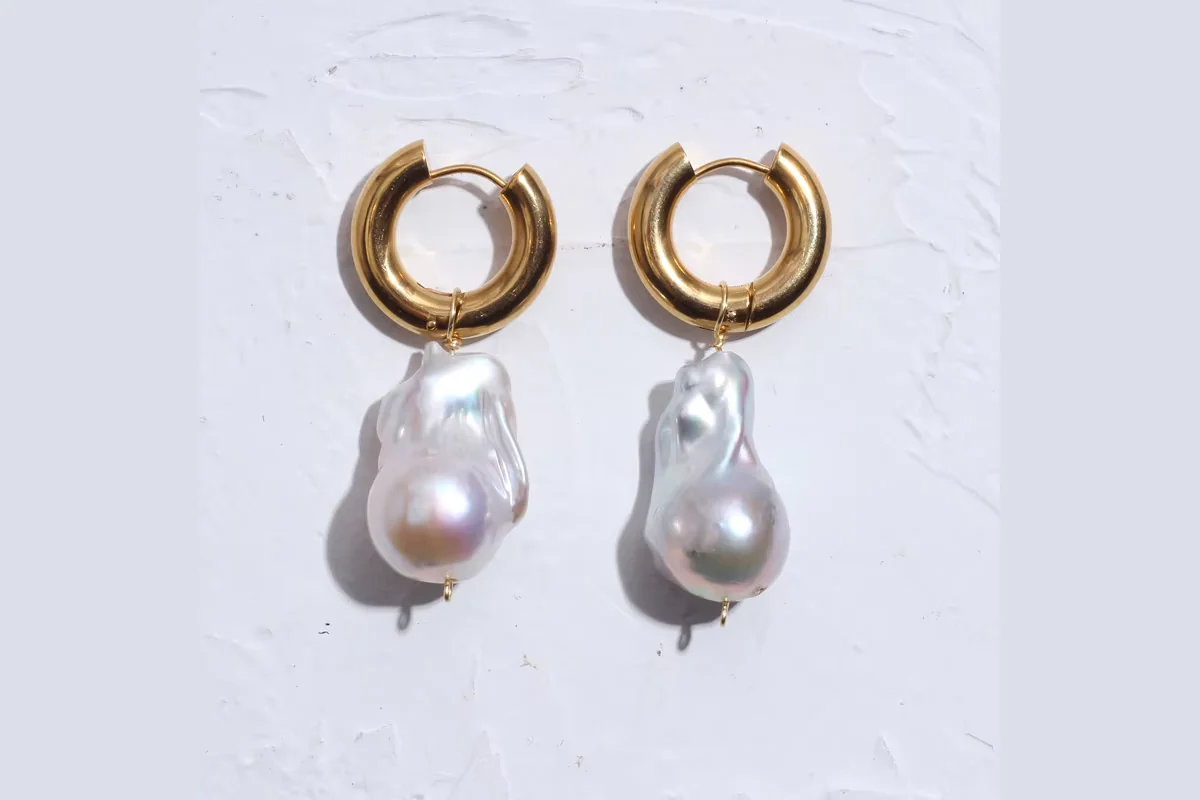
For an earring, compare the intended front view with the side view. For a pendant, check whether the attachment places the preferred face forward in the sample. For a necklace, lay the pearls in the intended sequence and look for abrupt changes that interrupt the pattern you wanted.
Do this before approving the appearance from one attractive photograph. A design decision made only from that view may miss the shape visible when the piece moves.
Three Ways to Work With Irregular Shapes
Use one pearl as the focal point. A pendant or single-pearl drop allows you to build the design around one chosen outline. Sketch the intended top and bottom directly on a copy of its photograph. This is useful when a particular curve or projection is the reason for selecting it.
Build a family of related shapes. Choose pearls that share a broad character, such as elongated forms or compact rounded forms. They do not have to share every contour. Decide which differences are welcome and which would make one piece look like a different style.
Make contrast the pattern. Alternating a broad pearl with a narrower one can be a deliberate design choice. Lay out the full sequence first. If every change is left to chance, it becomes harder to tell whether the finished result follows the original idea.
These approaches can coexist in a collection, but each style needs a clear intention.
How to Select a Balanced Earring Pair
Here is a hypothetical selection exercise, not a production tolerance or an available stock list.
Suppose three loose pearls are labeled A, B, and C. A measures 15 × 10 mm, B measures 15 × 10 mm, and C measures 16 × 10 mm. A and C have comparable elongated outlines; B has a broad shoulder that makes it look heavier from the front.
For a softly coordinated pair, start by reviewing A with C. The matching measurements of A and B are useful information, but they do not settle the visual decision. Place both candidates at the proposed hanging angle, then compare the pair from the front and side. Check total earring length after assembly, rather than assuming loose-pearl length will determine it.
If the design instead calls for intentional asymmetry, A and B might be the preferred combination. Document that choice with a photograph and a short explanation: “Different outlines are intended; keep the apparent scale balanced.”
The lesson is to match the design brief, not just the numbers.
How to Keep a Collection Consistent
For repeated production, one beautiful sample is an incomplete explanation of acceptable variation. Build a small reference group showing the look you want to repeat.
Separate the decisions into three plain-language categories: features to keep, differences to allow, and examples to exclude. A possible brief might say: keep an elongated profile and coordinated color; allow individual contour differences; exclude shapes that look unusually wide beside the approved group. Those are starting instructions to discuss and refine with physical samples, not universal standards.
Retain the selected arrangement and mark the intended orientation. If a later sample looks different, you can discuss the specific change instead of debating whether it is “baroque enough.” For customer-facing images, plan to show representative variation as well as a finished hero piece. An exact-shape expectation should not depend on an easily overlooked sentence.
Check the Whole Pearl, Then the Finished Piece
An irregular shape does not make every surface condition desirable. GIA notes that severe surface features can affect durability, while well-formed baroque pearls can be valued in their own right. Shape and condition therefore deserve separate attention. GIA's pearl reference
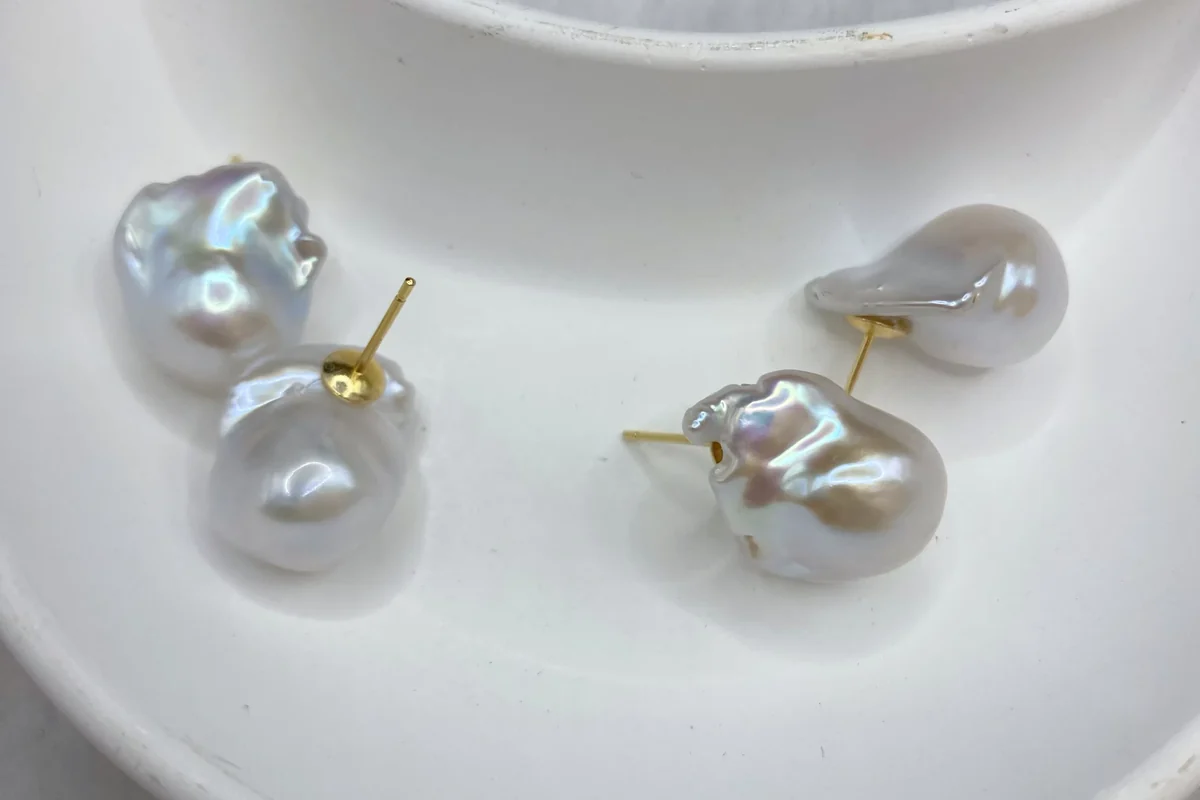
During visual review, note any area needing explanation rather than automatically accepting it as character. Compare both sides under consistent lighting, record concerns, and ask for clarification before assembly. A photographic review is useful for selection; it is not a measurement of internal structure.
Review the assembled sample for orientation, pairing, movement, and contact with the wearer. If identity or treatment disclosure needs independent confirmation, discuss suitable testing. GIA's identification reports address natural or cultured identity, formation environment, and detectable treatments; appearance alone does not provide that report. GIA sample pearl reports
Choose the Variation You Want to Repeat
Successful baroque pearl jewelry begins with a clear visual idea. Decide whether one outline is the focal point, a group should feel coordinated, or contrast is intentional. Then use the finished sample to check that idea from more than one angle.
For a collection, preserve the reasoning along with the reference pieces. “Keep this elongated character; allow these contour differences” gives the next selection a useful direction.
Key Takeaways
- Select a pearl for its intended position in the finished piece, including the front and side views.
- Match earring pairs by visual balance as well as measured dimensions.
- Use a reference group to explain acceptable variation across a collection.
- Review surface concerns separately from the decision to use an irregular shape.
Frequently Asked Questions
Yes. Genuine pearls, including cultured pearls, can have baroque shapes. The shape name alone does not authenticate an item. Ask for the complete pearl description and supporting information appropriate to the purchase. GIA's pearl reference
Shape alone cannot give you a reliable price comparison. Compare the actual pearls and what the quoted selection includes. A low-cost assorted group and a carefully selected earring pair answer different design requirements.
That depends on the intended design. A coordinated pair can use related silhouettes, while an asymmetrical pair can deliberately differ. Approve the complete pair and explain which features should remain consistent.
One number leaves important information out. Record length and width, add depth when relevant, and supply an orientation photo. Two pearls with the same measurements can still present very different outlines.
Show a representative group alongside the finished design, and explain the dimensions or appearance features that remain consistent. Agree on the acceptable range during sample review before using it in product descriptions.
Related Resources
- Baroque Pearl Jewelry: explore the collection relevant to irregular pearl designs.
- Custom Pearl Earrings: plan paired and intentionally asymmetrical styles.
- Sample Development: review the process for moving from an idea to a sample.
Send your design reference to LuxoPearl with the intended pearl orientation and the variation you would like the collection to retain.
Contact Us